
Keynote talks and workshops
During this Symposium, we will host five Keynote talks and five Keynote workshops aligned with the conference themes.
More information coming soon!
KEYNOTE TALKS
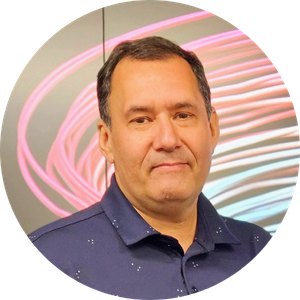
Topic
Data visualisation
Title
Scientific visualisation in an era of AI and social media
Abstract
Astronomy deals with abstract concepts: wavelengths beyond human perception, physical scales beyond human reach, and time scales far removed from human experience. For this reason, scientific visualization is an indispensable tool in astronomy communication, it allows us to see the invisible, zoom through space, and compress time. The way that digital content is discovered, the platforms on/in which it is viewed, and even how it is created are all rapidly evolving. In an era when anyone can quickly make a video of anything, how can scientific content creators maintain trust? Using examples from the NASA Scientific Visualization Studio this talk explore ways to move forward in this environment. I will also suggest some concrete steps that the Astrovisualization community can take to maintain the public’s trust of their work in the AI era.
Biography
Mark SubbaRao leads NASA’s Scientific Visualization Studio, a group tasked with visualizing NASA science results for public audiences. Before joining NASA, Mark spent 18 years at the Adler Planetarium in Chicago, where he produced planetarium shows and designed museum exhibits featuring data-driven scientific visualizations. During 2019-2020 Mark served as President of the International Planetarium Society (IPS), where he spearheaded the ‘Data to Dome’’ initiative – an effort to prepare the planetarium community for the big data era. Before that he worked at the University of Chicago where he was part of a team that created the largest 3D map of the Universe, the Sloan Digital Sky Survey. Mark SubbaRao has a PhD in Astrophysics from The Johns Hopkins University. He is the author of over 100 scientific publications. Mark’s visualizations have been widely featured in print, TV, and museums. His visualization work has been recognized with significant awards including the NSF’s Vizzies, The International Science and Engineering Visualization Challenge, and the Deauville Green Awards. Asteroid 170009 Subbarao is named in recognition of Mark’s work on the Sloan Digital Sky Survey.
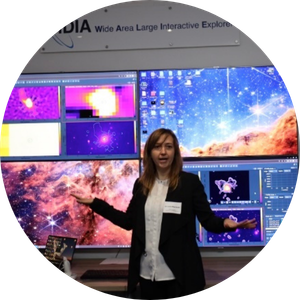
Topic
Emerging technology
Title
Exploration of astronomical (and multidisciplinary) datasets and simulations using immersive technologies: Lessons learnt
Abstract
The next generation of astronomical facilities, such as the SKA Observatory or the Vera Rubin Observatory, and other exascale surveys, will produce data of a volume and complexity that challenge not only how we store and analyse it, but how we communicate it, both within the research community and to funders and the public. Immersive technologies, from digital planetaria to Virtual Reality (VR), offer a promising bridge between technical data exploration and public engagement, but they also present some challenges. In this talk, I will draw on my experience as Director of the UCT/IDIA Visualisation Lab to reflect on what we have learned deploying immersive technologies for both research and communication/education purposes over the past several years. I will discuss where digital planetaria and VR have the potential to succeed and fail as tools for conveying complex astronomical data and processes to diverse audiences, from research collaborators to the general public. Building on these lessons, I will introduce iDaVIE, our new open-source VR software for interrogating multi-parameter astronomical datasets (e.g., spectral cubes, catalogues, and cosmological simulations). I will present its capabilities for immersive data interaction, and show recent scientific results it has enabled, including analyses of MeerKAT and ASKAP data, alongside its emerging role as a communication and education tool.
Biography
Dr Lucia Marchetti is a Senior Lecturer in Astronomy at the University of Cape Town and Director of the UCT/IDIA Visualisation Lab. She holds a Ph.D. in Astronomy from the University of Padua, Italy. Her research focuses on multi-wavelength galaxy formation and evolution, strong gravitational lensing and big data visualisation (exploiting both planetaria and VR technology). She is an active member of several international collaborations within Vera Rubin, Euclid, 4MOST and MeerKAT surveys. A dedicated science communicator, she coordinates Soapbox Science South Africa. She is a member of the International Astronomical Union (IAU) Division J – Galaxies and Cosmology Steering Committee, of the South African Institute of Physics (SAIP), and of the African Astronomical Society (AfAS). Publications: ADS library | LinkedIn: Lucia Marchetti
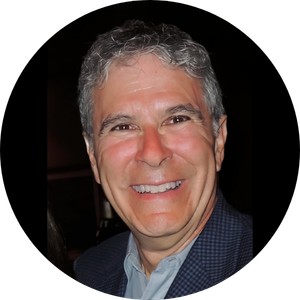
Topic
Communicating astronomy with funders and policymakers
Title
Communicating effectively with policy makers
Abstract
In working with policy makers in our city, in the US Congress and Agencies, and at the United Nations, I have found some general trends. They are typically very interested in issues affecting astronomy. Many have no technical background, but are expert in law and policy. Specialist supporting staff can have technical backgrounds, but not usually in physical sciences. There are often national policies that can conflict with the needs for protecting astronomical facilities, for example, stimulating industrial development. It reflects well on your contacts when they can bring a winning solution to their higher-level bosses.
The message has to be concise and easily understandable. We can’t assume that the value of astronomy is self-evident. Context has to be provided for why the science and the facilities are valuable and why protecting them is in the local/national/international interest. The best situation is when you are perceived to be a credible, expert source. We are experts in astronomy, not necessarily in environmental science or in law and policy. It’s therefore very worthwhile to make a clear statement of the problem in the context of astronomy and the need for a solution, without appearing to prescribe a fixed approach. Practical examples are given.
Biography
Richard Green is an Emeritus Astronomer at Steward Observatory at the University of Arizona. During his career, he served as Deputy Director of the US National Optical Observatory (now NOIRLab), Director of Kitt Peak National Observatory, Director of the Large Binocular Telescope Observatory on Mt. Graham, and Director of UKIRT Observatory in Hawaii. He served a term as Division Director for Astronomical Sciences at the National Science Foundation in Washington, DC. He served two terms as the President of the IAU Commission on Site Protection and was the Interim Director of the Center for the Protection of the Dark and Quiet Sky. He currently serves as the Interim CEO of the LSST Discovery Alliance, represents the IAU at the United Nations Committee on the Peaceful Uses of Outer Space, and chairs the IAU Working Group on Astronomy on the Moon.
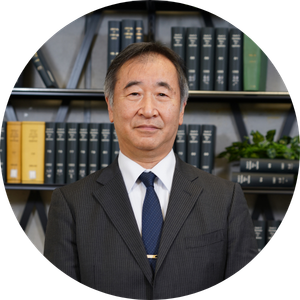
Topic
Combatting misinformation
Title
Building trust in science: Lessons from my experiences
Abstract
Trust is the foundation of scientific progress. Major discoveries are accepted because they emerge from rigorous experiments, independent
verifications, and open international collaboration. In this presentation, I will reflect on how trust has been established through my experiences
in the Super-Kamiokande neutrino experiment and in the KAGRA gravitational wave project. I will also discuss my experiences as the President of the Science Council of Japan several years ago, where interactions between science, society, and policy highlighted both the importance and the fragility of trust in science and scientists. Based on these experiences, I will discuss how we should maintain trust in science and why scientific integrity, openness, and international cooperation are essential for sustaining trust in science.
Biography
Takaaki Kajita is a Distinguished University Professor and a Special University Professor of The University of Tokyo. He is affiliated with the Institute for Cosmic Ray Research (ICRR) of the University of Tokyo. Kajita received his PhD from the University of Tokyo School of Science in 1986, and has been researching with Kamiokande and Super-Kamiokande neutrino detectors at the Kamioka Observatory of ICRR in central Japan. In 1998, at the Neutrino International Conference held in Takayama, Japan, he presented analysis results that provided strong evidence for atmospheric neutrino oscillations. In 2015, he shared the Nobel Prize in Physics for his role in discovering atmospheric neutrino oscillations. He is the project leader of KAGRA, aiming to explore gravitational wave astronomy.
Kajita was the director of the Institute for Cosmic Ray Research between 2008 and 2022. He was the President of the Science Council of Japan between 2020 and 2023. He has been a member of the Japan Academy since 2019.
Topic
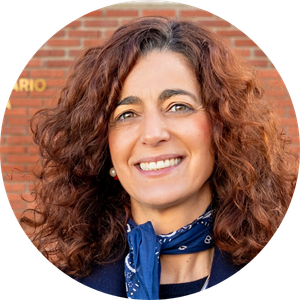
Trust in science, trust in scientists
Title
What makes science and scientists trustworthy? Lessons for astronomy and science communication
Abstract
Astronomy frequently asks the public to trust highly specialized expertise, complex instrumentation, large collaborations, probabilistic claims, and findings that most people cannot verify themselves. Yet, concerns about science controversies, research misconduct, or the politicisation of space agencies ambitious long-term programmes in human space exploration, raise questions about how the role of trust in the communication trust is formed and maintained. While scientific institutions often assume that breaches of research integrity directly undermine public trust, empirical evidence remains limited. How do people decide which scientific claims and which scientists to trust? And what sustains trust when scientific authority is questioned?
Drawing on public deliberative workshops with citizens from seven European countries, this presentation examines how people discuss scientific findings and evaluate trustworthiness. The talk explores the expectations they place on scientists, and the different dimensions people mobilise when judging science and scientists, including expertise, values, institutional practices, and communication. By examining how trust is negotiated in public conversations, the presentation invites reflection on how scientific institutions can communicate uncertainty, transparency, and credibility in ways that strengthen their relationship with society.
Biography
Marta Entradas is professor at ISCTE-IUL (Portugal) and visiting fellow at the LSE (UK). Marta’s research focuses on public opinion about S&T, public trust in science and scientists, and science communication. She has conducted studies on astronomy communication both from the perspective of the public and scientists themselves, including the publication of the largest study of the IAU community and their communication practices and motivations across various world geographical regions. She received her PhD in Science and Technology Studies (STS) from University College London (UCL), was a Marie Curie Fellow (MSCA) at LSE and a Fulbright Scholar at Cornel University (NY). She was recognized with the ‘European Young Researcher Award’ (EYRA) (2016) by EuroScience, and by Ciência Viva in the ‘Women in Science’ book. She is PI of various funded projects, coordinating international comparative studies on science communication.
KEYNOTE Workshops
Topic
Data visualisation
Title
Four-Dimensional Digital Universe
Abstract
The Four-Dimensional Digital Universe (4D2U) Project at the National Astronomical Observatory of Japan (NAOJ) aims to visualise astronomical data obtained from telescope observations and supercomputer simulations in four dimensions—three spatial dimensions and one time dimension. The project produces two main types of content: (1) 3D visualisation videos that present phenomena such as the evolution of the large-scale structure of the universe and the formation of planets, and (2) the Four-Dimensional Digital Universe Viewer, Mitaka, an interactive application that enables users to explore astronomical data and experience the hierarchical structure of the universe. In addition to these public-oriented resources, the 4D2U Project develops and provides Zindaiji, a visualisation tool that allows researchers to visualise and explore their own scientific data. More recently, we have been developing a web application that brings the core features of Mitaka to a web browser. It is scheduled for release in the near future and will enable users to explore the hierarchical structure of the universe regardless of their operating system or device. In this special session, we will present an overview of the 4D2U Project and introduce its latest developments.
Biography
- December 2001 – The 4D2U Project was launched with funding from a competitive research grant.
- April 2003 – A three-screen stereoscopic theatre was established as an experimental facility at the NAOJ Mitaka Campus and opened to the public. At the same time, 4D2U visualisation videos and software became available for download through the project’s website.
- March 2007 – The 4D2U Dome Theatre was established at the NAOJ Mitaka Campus through industry–academia collaboration and opened to the public. It was Japan’s first dome theatre to offer stereoscopic viewing using spectral multiplexing technology. Distribution of dome-format content for planetariums also began.
- April 2007 – Responsibility for operating the project was transferred from competitive grant funding to the National Astronomical Observatory of Japan.
- April 2015 – The 4D2U Dome Theater was renovated and reopened to the public as the world’s first dome theater to provide full-dome stereoscopic viewing using active shutter glasses. Distribution of virtual reality (VR) versions of 4D2U content also began.
- April 2020 – The 4D2U Project received the Award for Science and Technology (Public Understanding Promotion Category) in the 2020 Commendations for Science and Technology presented by the Minister of Education, Culture, Sports, Science and Technology (MEXT).
Topic
Emerging technology
Title
Beyond being there: Emerging technologies for effective distributed collaboration
Abstract
Astronomy has become an increasingly distributed endeavour: our teams, collaborations, projects and facilities routinely span institutions, countries and time zones. Yet the ways we work together have not always evolved at the same pace. This workshop will explore how we can make distributed collaboration and communication in astronomy more effective, inclusive and engaging. We will consider practical approaches to distributed national and international teamwork, as well as meetings and conferences, sharing experiences and identifying better practices for working across distance. But improving distributed work doesn’t necessarily mean trying to recreate the experience of being together in person. Emerging technologies offer the possibility of doing things differently – and potentially even better. As part of the workshop, we’ll explore experimental approaches including immersive technology, asking how new tools might not simply augment the ways we have traditionally worked, but enable forms of collaboration that go “beyond being there.”
Biography
Dr Vanessa Moss is a radio astronomer based at CSIRO, Australia’s national science agency. She is Head of Science Operations for the ASKAP telescope in remote Western Australia, overseeing the observational workflow from scientific specification to generation of raw data products, and has researched cosmic phenomena across the universe, from the hidden structure of the Milky Way halo to dense gas casting shadows against distant black holes. Vanessa has extensive experience in radio observatory operations, data analysis/visualisation, automation of complex systems and science communication across numerous contexts. She is a strong advocate for optimising all interactions by maximising accessibility, inclusivity and sustainability, and leads “The Future of Meetings” (TFOM) community to explore and disseminate new ways of meeting and collaborating in academia and beyond. She is the Media and Outreach Coordinator for the Astronomical Society of Australia, the Subsystem Lead for the Observation Planner on the Caltech Deep Synoptic Array telescope and a member of the AAL Industry Engagement Advisory Committee.

Topic
Communicating astronomy with funders and policymakers
Title
It’s all about who you know! or is it? Reimagining funding in public engagement
Abstract
Funding for public engagement in astronomy is predominantly driven by national governments and bilateral and multilateral partners, where policy and advocacy are instrumental to achieving the investment needed to drive research and development. This also requires interest from institutes and PIs who include public engagement as a core activity on major grant proposals, leaving public engagement potentially missing out if there’s no one to champion the cause. But are there other sources of income? What are they and how are they relevant to public engagement? How do you become financially sustainable, and use this as a key driver to influence change and interest in science communication?
This session gives an introduction to the following:
- Theories of Change and crafting your story
- Breaking the dependencies on cyclical, institutional grant funding
- Creating alternative sources of income – positives and challenges
- Key strategies in income generation for public engagement: relationship building and social media as practical examples of success and lessons learned
Students and early career researchers interested in learning more about alternative funding pathways for areas such as public engagement and entrepreneurship may find this session of particular interest.
Biography
Based at Leiden Observatory, Genevieve is Head of Development and Engagement at the International Astronomical Union (IAU). She has 25 years of expertise in nonprofit leadership in STEM, education and international development. She’s worked both in grantmaking for foundations and on the other side in major giving and institutional funding across the UK, Netherlands and New Zealand, where she has an especial interest in diversifying income streams to ensure financial sustainability for nonprofits. This includes a dedicated focus on impact investing, earned income, entrepreneurship and relationship management. She is passionate about gender inclusion and equity in astronomy and has supported groups such as IDEEA and the IAU’s Women in Astronomy Working Group. She is on the Supervisory Board of English For All in the Netherlands, which provides free English classes to refugees and asylum seekers, and holds an MSc in Gender, Sexuality and Society from Birkbeck College, University of London.
Topic
Combatting misinformation
Title
When Science Looks Like Science: Where Our Guard Runs Lowest Against
Misinformation
Abstract
Astronomy has an unusually rich and highly visual public communication environment, making it fertile ground for content that merely looks scientific: a slickly produced space video with the trappings of a peer-reviewed paper, or a claim dressed up in technical jargon and a NASA-style logo. For researchers, communicators, and outreach professionals, the challenge is not only identifying false claims, but recognising the cues that make misleading content appear credible in the first place.
Grounded in original qualitative audience research, this workshop maps how four distinct audience groups, from lay and interested publics to involved and professional astronomy audiences, recognise “scienceness” through different credibility cues. These differences create different points of vulnerability. Together, these patterns form a map of audience vulnerability. This is not a map of who gets fooled, but of where each group’s guard runs lowest. Even scientists are not immune; their blind spots simply look different. The workshop also examines how highly engaged audiences can become unwitting amplifiers when misleading content travels through trusted sources.
Participants will examine real cases of pseudo-rigorous astronomy content and use the audience-sensitivity map to identify which credibility cues may create vulnerabilities for different audiences. They will then apply the framework to audiences they work with and consider how their own outreach, teaching, or public communication could be adapted accordingly. By the end of the workshop, participants will have a practical framework for asking not only “Is this information misleading?” but “Who is most likely to find it credible, why, and where should we pay closer attention?”
Biography
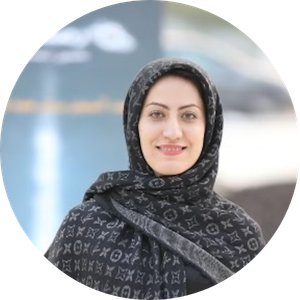
Fatemeh Bonyadi is a science communication researcher and practitioner whose work explores trust in science, astronomy communication, and meaningful public engagement. She holds a PhD in Science Communication from Allameh Tabataba’i University, where her research examined how different publics build trust in astronomy and science. She is the founder of the Soha Scientific Network, an astronomy outreach initiative working to expand access to astronomy among underserved communities in Iran. Her work with Soha received the Science Engagement Award at the 2021 Falling Walls Science Summit. She has also served as Head of the Education Committee of the UNESCO Chair on Science and Technology Communication, developing educational and public engagement initiatives in
science communication.
Her current work sits at the intersection of science, culture, technology, and audience engagement. She works with museums and science and cultural institutions to explore how emerging technologies such as AI, VR, and XR can create more engaging ways for people to encounter science, connect scientific knowledge with cultural and creative practices, and build greater trust and participation. She is also an ASTRO ACCEL Early Career Researcher. Across her research and practice, Bonyadi brings together audience research, astronomy outreach, science communication, and emerging technologies to explore how people connect with, engage with, and trust science.
Topic
Trust in science, trust in scientists
Title
Building trust through Trustworthiness
Abstract
We often talk too vaguely about trust in science. Drawing on contemporary trust research, this workshop will provide a framework for thinking more strategically about trust and trustworthiness. Participants will explore how to identify the specific forms of trust they seek from different audiences and how to demonstrate dimensions of trustworthiness such as expertise, benevolence, integrity, and openness. The workshop will also examine the unique challenges and opportunities facing the astronomy community as it seeks to demonstrate trustworthiness across a range of public contexts. Through brief case studies and small-group discussions, participants will apply the framework to their own communication challenges and identify practical approaches for demonstrating trustworthiness.
Biography
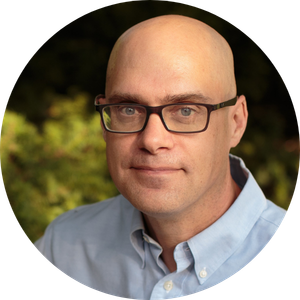
Dr John Besley is the Ellis N. Brandt Endowed Professor in the College of Communication Arts and Sciences at Michigan State University. His work focuses on helping scientists make more strategic, evidence-based communication decisions. He is a co-author of Strategic Science Communication (2022) and Science Communication for Scientists (2025), and has published extensively on public trust, public engagement, and scientists’ views about communication. Recent work supported by the Kavli Foundation has focused on helping basic scientists, including astronomers and particle physicists, think more strategically about their engagement priorities. His research has also been supported by the U.S. National Science Foundation, the U.S. National Institutes of Health, the U.S. Department of Agriculture, and a range of private foundations.
Join Us at the Symposium
Reserve your place now for an enlightening experience at the forefront of astronomy communication.